Affichage des articles dont le libellé est Europe. Afficher tous les articles
Unknown

Diamond Museum

By  

See how the sparkling precious stones are formed, admire diamond-studded works of art and learn about Amsterdam’s historical connection to the gems.
The Diamond Museum in Amsterdam takes you on a journey that started about three billion years ago when diamonds were formed, and ends with the diamond polishing process as it’s done today.
For centuries, Amsterdam was an important center for diamond production, employing generations of mainly Jewish diamond polishers. The former “city of diamonds” lost this status in World War II, when most Dutch Jews were either murdered by Nazis or left the country of their own free will. The diamond industry in The Netherlands never fully recovered, but is still active today.
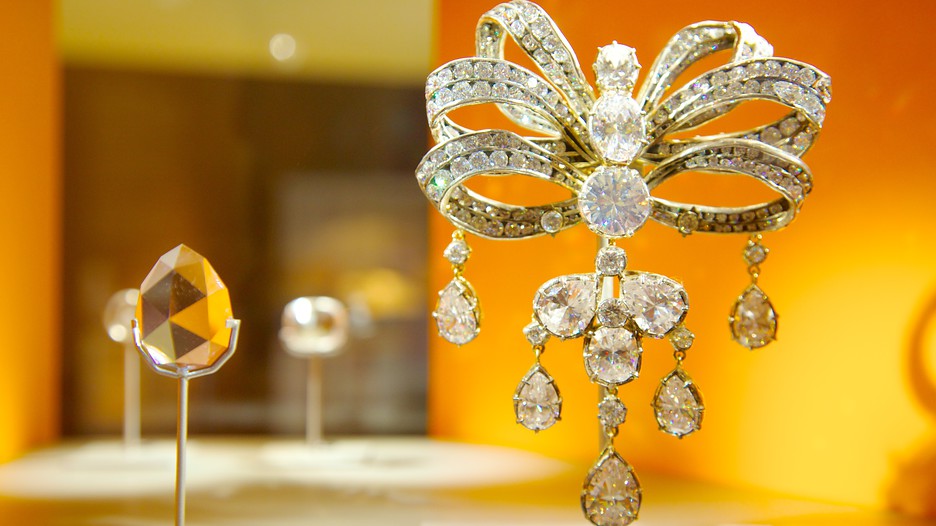
Head to the Diamond Museum to admire the small, yet impressive collection of gemstones and jewelry, plus replicas of world-renowned diamonds. The museum experience begins with a short film illustrating how diamonds are formed under the earth. This is a great orientation to the collection of rings, necklaces and brooches.
Marvel at the House of Oranje-Nassau section, which contains replicas of some of the Dutch Royal family’s most important heirlooms. There are several videos, one about infamous diamond robberies. Another movie explains how to find out if a diamond is fake — try out the technique for yourself! Discover how the South-African De Beers company became the biggest producer of rough diamonds in the world. At the exhibit Amsterdam, City of Diamonds, informative signs describe how the Dutch capital was the center of diamond polishing and trade for 400 years.
Admire the bejeweled Japanese katana, a sword created by a Dutch artist. She used Murano glass, and a jewel designer set it with 1967 diamond pieces and 494 rubies. A rotating exhibit room showcases diamond-related items, borrowed from other collections from all over the world.
The Diamond Museum looks out over the Museumplein. The nearest tram stop is Hobbemastraat. You can also take the canal boat tour to the dock at Rijksmuseum and walk from there. There are parking lots in the city center, but spaces are limited.
The museum is open daily and you should allow about an hour for your visit.
Read More
Unknown

Vondelpark

By  

One of the oldest and largest public parks in Amsterdam is a relaxing place to rest, have lunch or watch a performance after visiting the nearby museums.
Vondelpark is a State Monument and an Amsterdam hot spot in summer. This is where locals go to sunbathe, cycle or play outside. There are also concerts or other performances on weekends. Over 10 million visitors come here every year to enjoy nature and culture, as well as order drinks and meals on the restaurant terraces.
Opened in 1865, Vondelpark injected much-needed greenery into the then already very developed city. The park was named after the Dutch poet and playwright Joost van den Vondel. At that time it was a popular place for strolling or horseback riding. Today, the horses have made room for bicycles, of which there seem to be hundreds at any given time.
Vondelpark is at its liveliest when the sun shines and the locals flock here for a much-needed dose of vitamin D in the sometimes cold and rainy country. In summer, the Dutch suddenly all show their skin, with the ladies sunbathing in bikinis and the men playing soccer in shorts. No matter which time of year, locals love to come here for their lunch break or to enjoy the outdoors with family and friends.
Lounge on the grass, or rent a bike or roller blades to explore the paved pathways that loop through the 120 acres (47 hectares) of greenery, ponds and flowerbeds. There are playgrounds, a rose garden and terraces. The ponds, hawthorn and chestnut trees are frequented by a interesting variety of birdlife. While sitting on one of the benches, keep an eye out for the wild parakeets and nesting storks. There’s also a Picasso statue in the park: the Spanish artist donated The Fish in 1965.
An open-air theater hosts musical concerts, plus theater and cabaret between June and August. Some shows are free, others request a donation. Afterwards, enjoy coffee with pancakes at one of the pavilions. You can also grab a chair on the big terrace of the circular Blauwe Theehuis (Blue Teahouse), a gathering place since 1937.
Vondelpark is a short walk from Leidseplein and a few blocks north of the Museumplein, where many trams stop. There are parking lots in the city center, but spaces are limited.
Read More
Unknown

Leidseplein

By  

This lively square in the heart of Amsterdam’s cultural district offers dining and entertainment, with an array of theater, movie, music, comedy and street performances.
Delve into the many delights of buzzing Leidseplein to people-watch while enjoying a meal or just a drink after a day of sightseeing. In the warmer months, the area is packed with people gathered on the terraces of the restaurants and bars. Order a local beer and watch the street performers. In the winter, visit one of the many restaurants or clubs, or head to the ice rink surrounded by hot food and drink stalls for an atmospheric outdoor experience. If you love architecture, 17th-century Leidseplein has some interesting buildings for a walking tour.
There’s plenty to do at night at Leidseplein. Enjoy a typical Dutch meal or order American-style fast food before taking in a movie or a concert. Art lovers can meet up at De Balie, a cultural center for film screenings, theater and debate. De Balie’s buzzing café faces Leidseplein. For a laugh, watch the street performers or book a comedy show (in English) in one of the nearby theaters. Music lovers should check out popular nightclubs Paradiso and Melkweg. These local institutions also host concerts and cultural events. Check their websites for a current schedule of shows and to buy tickets in advance.
In the redbrick neo-Gothic Stadsschouwburg that dominates the square, many of the performances are suitable for an international audience. Dutch plays often have surtitles, which are digital displays with English translations. Next door are the ornate fountain, bar and restaurant of the Amsterdam American Hotel, a National Monument in art deco–style. A two-minute walk away is Max Euweplein, an arty square with a life-sized chess board. Here you will find the Hard Rock Café, with a lovely terrace facing the canal, and the Holland Casino.
Leidseplein is in the southwest of the Canal Ring and easy to get to by public transport, even late at night. It’s a short walk from the Vondelpark. If you are driving, consider leaving your car at one of the park-and-ride lots at the edge of the city and then use public transport to get around. There are parking lots in the city center, but spaces are limited.
Many pubs close just after midnight, but clubs stay open almost all night.
Read More
Unknown

Flower Market

By  

Enjoy the colors and fragrance of typical Dutch flowers, or buy bulbs and souvenirs while browsing the floating flower stalls on one of Amsterdam’s oldest canals.
There is no other place in the world like the Bloemenmarkt (Flower Market) in Amsterdam. This collection of floating stalls has been located on the Singel canal since 1862. It’s the only remaining one of its kind in the Netherlands. Shop for fresh tulips or seeds to plant at home and other souvenirs of Holland. When buying natural products check first with the merchants if you can legally take, or mail, them to your home country.
Constructed on a series of pontoons, the front of the 15 stalls of the Flower Market spills out onto Singel street. The water of the Singel canal marked the city’s outer edge in the 15th century.
Flower varieties on sale depend on the time of year. Locals come here to buy tulips in spring, roses in summer and Christmas trees in December. There’s even a Christmas store that sells tree ornaments and candles year-round. It’s easy to spend an hour or so browsing the stalls, and then head to the bridge to take photos of this unique floating market.
Learn about Dutch flowers and take in the sweet scents of species such as lilies, carnations and roses. The Flower Market is a good place to purchase bulbs, such as tulips and narcissus. Prices are reasonable, making this a great place to shop for both flowers and souvenirs. Marijuana plants and cannabis kits are also on display.
Many shops here sell the trademark Delfts Blauw porcelain of Holland, painted clogs and Dutch cheese. Don’t be afraid to barter, as the Dutch have a long history of trading and don’t mind a bit of negotiating. Visit the café for a toasted sandwich with Gouda or Edam cheese.
The Flower Market floats between the bridges of Koningsplein and Muntplein. A visit to the covered stalls is free and they are open daily, but the area can get crowded. Many trams and buses from Central Station stop at Muntplein and Koningsplein. If you are driving, consider leaving your car at one of the park-and-ride lots at the edge of the city and then use public transport to get around. There are parking lots in the city center, but spaces are limited.
Read More
Unknown

Zaanse Schans

By  

Wander through working windmills, taste local liqueurs, take a basic course in traditional methods of chocolate making and watch the carving of clogs.
Jump on your bicycle for a daytrip to the wonderful world of windmills, traditional crafts and rolling green fields that is Zaanse Schans. Just a short pedal away by bike from Zaandam, the former milling village awaits you. See its museums, historic buildings, clog makers and liquor distilleries.
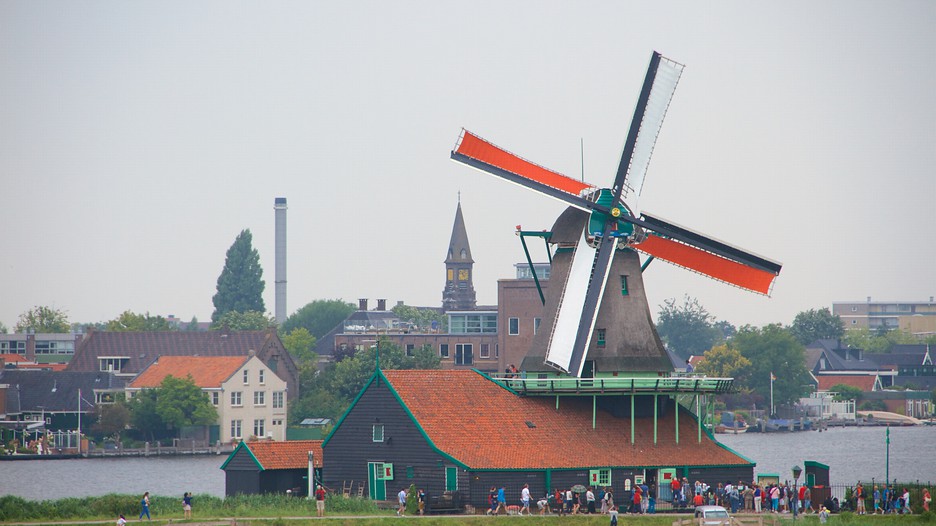
Zaanse Schans is known for its charming and numerous windmills. In the town’s heyday as an industrial area in the 18th and 19th centuries, it had about 600 mills. Today there are fewer and many of them have been brought to Zaanse Schans from elsewhere in the Netherlands, but they continue their work, some using traditional methods and others more modern. Walk around and note their uses, which include mustard milling, sawing, oil milling and even dying fabric.
Visit some of the mills to see them in production. They have different opening hours, so it is best to check before you go. De Huisman, the spice grinding mill, which you’ll be able to locate by its smell, is worth a visit for the freshly ground products that you can purchase in its traditional shop.
The area has also been known for its craftspeople. Today you can visit workshops to see demonstrations of clog making, porcelain painting, pewter making and barrel making. Taste the locally crafted liquors at Liqueur Distillery de Tweekoppige Phoenix. Grains ground in the milling town were also used historically for alcohol production.
Get an education in chocolate making using historical techniques at the Cocoa Lab and taste test the treats made at the site.
For a bit of background on the industrial past of Zaanse Schans, visit the Zaans Museum, where you’ll see old utensils and factory equipment. Interact with computer games and displays that simulate the experience of factory work. See the fantastic craftsmanship of Dutch clocks throughout time in the Museum Zaanse Tijd and enjoy the smells and tastes of freshly baked bread and sweet treats in the town’s original 1658 bakery.
Read More
Unknown

Volendam Harbour

By  

Head to the town’s esplanade for cafés and restaurants with fresh fish, views over the water and shops where you can photograph yourself in traditional costumes.
The liveliest place in the old fishing village of Volendam is its harbor full of historic sailing ships. Here you’ll find cafés where you can relax on a sunny afternoon and visit stalls selling salted herring, smoked eel and kibbeling. See Volendam Harbour’s traditional triangle-shaped architecture and forest of sailing ship masts which make it seem miles away from Amsterdam.
This town was originally the harbor of nearby Edam, but in the 14th century the Edammers dug their own canal to the Zuiderzee. Notice that the original harbor was reclaimed by damming and became the fishing village of Volendam, complete with its own traditions and culture.
If you have ever wanted to know how you’d look in a traditional Dutch costume, Volendam is the place to find out. Along the harborfront are shops where you can try on and photograph yourself in the Volendam style of “klederdracht,” complete with pleated hat and clogs for the ladies and wide-legged pants for the men. If you’re not interested in dressing up yourself, find plenty of photo opportunities with the many statues in the harbor depicting Volendammers in historic dress.
Walk just behind the harbor to the Volendams Museum where you can learn about the history, costumes and culture of the area between 1850 and 1950 in rooms decorated in period furniture.
If you have time, take the ferry from the harbor to the village of Marken. After a 13th-century storm, it became accessible for hundreds of years only by watercraft. Now it is joined to Waterland south of Volendam by a dike.
Having been isolated for so long, Marken maintained traditional culture and architecture much longer than did other mainland towns. Inhabitants developed their own traditional costumes and unique houses on stilts to deal with regular flooding. Walk along the island’s beach to see the lighthouse, built in 1839. When you get hungry, visit one of several restaurants around the ferry terminal. Try the local delicacy of smoked eel.
Be sure to visit Volendam Harbour and Marken for traditions, food and culture that you’re not likely to see in many other places.
Read More
Unknown

Sarphatipark

By  

De Pijp’s green oasis is the perfect place to relax in the warm sun, picnic with purchases from Albert Cuyp Market and enjoy the colors of Dutch blooms.
Sarphatipark is certainly one of the most beautiful of Amsterdam’s parks. It was designed to reflect formal English gardens. Enjoy its interesting follies, from little bridges over duck-filled ponds to the heritage pump station and gardener’s shed complete with flower-topped roof.
The park was named after the doctor and philanthropist, Samuel Sarphati. Its centerpiece is an ornate 19th-century monument erected in his memory. The bust of the Jewish doctor, who was at the forefront of health innovations and city planning in Amsterdam, was removed during Nazi occupation of the city. When Amsterdam was liberated, Dr. Sarphati’s bust returned to its place overlooking the weeping willows, lakes and brilliant flowerbeds of the park. Look for this lasting symbol of the resilience of the community despite the ravages of war.
The houses overlooking the park date from around Dr. Sarphati’s era and are notable for having housed the studios of several famous artists, including Piet Mondrian. Find his modernist works of striking colors and strong brush strokes in the Gemeentemuseum in The Hague. Look around the area to identify what he might have found as inspiration for his art.
The park’s location near some of the best coffee spots in Amsterdam and the food stalls of Albert Cuyp Market makes it a popular place for an impromptu picnic. Gather coffee, a round of truffle edam cheese, an assortment of fruit and some fresh baked goods from the market and enjoy a picnic on the green grass. In summer the lawns are dotted with local residents soaking up the sun’s warmth or whiling away the warm evenings. There are even plastic groundsheets available in the park if you’ve forgotten your picnic blanket.
Families traveling with children will appreciate the park’s fenced playground. Bars and restaurants encircle the area along Ceintuurbaan. Use Trams 3, 4 or 25 to reach Sarphatipark easily from throughout the city.
Read More
Unknown

De Pijp

By  

Thought to be named for its long, straight streets, this district was once the residence of artists such as Mondrian and is now one of Amsterdam’s trendiest spots.
Wander amid the weeping willows and brilliant flowerbeds of Sarphatipark, take in the bustle and bargains of the Albert Cuyp Market, shop at intriguing antique stores, pop-up shops and unusual boutiques and taste some of the foodie delights Amsterdam’s many migrant groups have brought with them to De Pijp.
Amsterdam’s “Quartier Latin,” De Pijp, has retained the ambiance and charm of its bohemian days when students and artists flocked to the low-cost accommodations of the former working-class quarter. Mondrian, famous for his modern artworks of black lines and blocks of primary color, worked in an attic room of De Pijp. Note that many of the streets are named after famous Dutch artists to reflect the district’s history.
The name De Pijp translates to “the pipe.” It is divided into Oude Pijp ("Old" Pijp) and Nieuwe Pijp ("New" Pijp) by the long Ceintuurbaan street, which is lined with 19th-century houses, cafés and gourmet restaurants. Have coffee in a former movie cinema, shop in a supermarket where products are grouped by recipe and enjoy fresh salads at one of the vegan cafés.
Some of Amsterdam’s best known and inexpensive Turkish, Surinamese, Moroccan and even Nordic restaurants are located in De Pijp. Seek out the multicultural shops and restaurants hidden behind the many stalls of the Albert Cuyp Market. Albert Cuypstraat is a street worth checking out for people-watching and observing humorous exchanges between stallholders and market-goers.
If you’re traveling with kids, head to the Sarphatipark’s playground or take them to the Kinderboerderij de Pijp in the Nieuwe Pijp, where they can pet pigs, rabbits, guinea pigs and chickens and enjoy farmyard activities.
When the sun sets, listen to live music at the former bathhouse De Badcuyp, now a music club and restaurant. Immerse yourself in beer history at the interactive Heineken Experience, housed in the former brewery, before a pub crawl through the backstreets of De Pijp. Find charming pubs with literally hundreds of beers on their menus. Though not nearly as famous as the Red Light District in de Wallen, De Pijp even has its own red light area along Ruysdaelkade.
Read More
Unknown

Suleymaniye Mosque

By  

This 16th-century mosque is not only the largest active mosque in Istanbul, but also one of the city’s most symbolic.
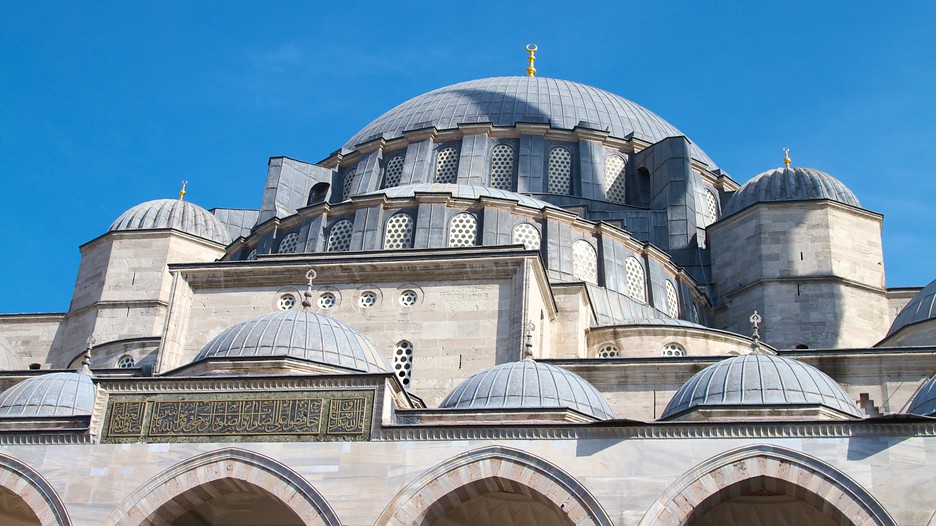
Built in the 1550s on the orders of Sultan Süleyman the Magnificent, the Süleymaniye Mosque is the largest and most imposing mosque in all of Istanbul. A short walk away from the Grand Bazaar, this striking Ottoman building dominates the Third Hill. From this vantage point you can enjoy excellent views across the waters of the Golden Horn.

Designed by the renowned Ottoman architect Mimar Sinan, the Süleymaniye Mosque was designed to outdo the grandeur and scale of the Hagia Sophia. Sinan borrowed Judeo-Christian design elements and one example of this is an allusion to the Dome of the Rock, which was built on the Temple of Solomon in Jerusalem. Sultan Süleyman regarded himself as something of a second Solomon, the famously wise king of Judah and Israel.

Although the mosque is not quite as large as the Hagia Sophia, it is still vast. Enter the light-filled, open space to see that its interiors are actually less decadent than most mosques in Istanbul. The use of tiles is minimized and there is just a subtle application of ivory woodwork.

 Head to the vast courtyard with minarets at each corner on the west side. The main dome is 174 feet (53 meters) high, and at the time it was constructed it was the highest above sea level in the Ottoman Empire. The mosque complex also houses a hospital, medical school and primary school. You are welcome to visit the restaurant and steam baths. 

See the striking tombs of Süleyman and his wife Roxelana in the garden behind the mosque. The tomb of Mimar Sinan, who was the chief architect for several Ottoman sultans, is nearby, just outside the walls of the mosque.

The Süleymaniye Mosque is open to visitors daily and free to enter. The mosque still functions as a place of worship, not just a tourist attraction, so non-Muslim guests are advised to refrain from visiting when Muslims come here to pray. Prayer happens a few times a day and on Friday afternoons and is preceded by the call to prayer from loudspeakers.
Read More
Unknown

Dolmabahce Palace

By  
Explore this monument to the decadence and stately grandeur of the greatest days of the Ottoman Empire and see the clock tower, gardens and mosque.
At the Dolmabahçe Palace you can tour the magnificent rooms where Ottoman affairs of state were once discussed and deliberated, stroll through the gardens and see the room where “The Father of the Turks” passed away.

Dolmabahçe Palace was the main seat of the Ottoman Empire from 1856 to 1922 and commissioned by the Sultan Abdülmecid I. Building started in 1843 and it cost the equivalent of 35 tons of gold to complete. The royal family left the medieval Topkapi Palace behind to live in Dolmabahçe’s even more opulent quarters.

The size of the Dolmabahçe Palace, with its 285 rooms and more than 40 halls, is impressive. Don’t miss the crystal staircase and huge Bohemian chandelier with 75 lamps, a gift from Queen Victoria. See the Red Room, with Hereke carpets, where guests were received by the sultan and admire the Hamam (bath).

It was at the Dolmabahçe Palace that the first president of the Turkish Republic, Mustafa Kemal Atatürk, passed away in 1938. He died in his bedroom at 9.05 a.m.,and the clock in that room is still fixed at that particular time. His seat of government was in the capital Ankara, but he used the palace as his residence whenever he was visiting Istanbul.

On the compulsory museum tour, you will enter stately rooms throughout the palace. In the male quarters, see the magnificent rooms that were once the scene of important state decisions. Then move on to the Haremlik, the area where Atatürk’s bedroom and the royal family’s private quarters used to be.

Head to the late 19th-century clock tower outside of the palace to admire its neo-baroque style. Walk through Treasury Gate at the front of the tower to get to a square along the waterfront of the Bosphorus Strait to visit the Dolmabahçe Mosque.

The palace is open every day except for Monday and Thursday. Note that the ticket office will only accept cash.The best way to reach Dolmabahçe Palace is by tram. From the Kabatas tram stop, the palace is 10-minute walk away along the waterfront.
Read More
Unknown

Rüstem Pasha Mosque

By  

See a hidden gem of Istanbul, an Ottoman house of prayer nearly 500 years old, with magnificent tiles, built in the middle of the market in the Fatih district.
Few foreign visitors go out of their way to see Rüstem Pasha Mosque, as it can slip easily under the radar compared to Istanbul’s many vast and dramatic sights. However, this building is well worth a visit because of its intricate beauty. The Rüstem Pasha Mosque is renowned as a fine example of decorative tiling and without a doubt it remains one of the city’s finest architectural treasures.

Rüstem Pasha Mosque is one of the great buildings designed by the legendary architect Mimar Sinan, who served under three sultans and made some of the most iconic structures in Istanbul. The mosque is named after the Grand Vizier Rüstem Pasha, who was married to one of the daughters of Süleyman the Magnificent. The mosque was built in his memory following his death in 1561.

Rüstem Pasha himself is remembered for plotting with Süleyman’s wife Roxelana to denounce the Sultan’s son Prince Mustafa, which led to the latter’s execution and the ascent to the throne of Selim “the Sot.” It’s said that this marked the beginning of the Ottoman Empire’s long decline.

Although he was one of the wealthiest men in the empire, Rüstem Pasha did not have a high enough status to rival the Sultan’s grand mosque. For this reason, the Rüstem Pasha Mosque is smaller and located where it is. It lies at the heart of the marketplace at the foot of the hill upon which the Süleymaniye Mosque stands.

Climb a narrow flight of steps to reach its open courtyard, located on a high terrace overlooking a complex of shops, including the Spice Bazaar. Once inside, admire the mainly red, white and blue tiles. The tiles are set in floral and geometric designs, and stone columns and huge arched doorways interrupt the designs splendidly.

Rüstem Pasha Mosque is in the Tahtakele neighborhood on the European side of Istanbul. The building still functions as a mosque, so you can’t visit during the five daily prayer sessions and on Friday afternoons. The calls to prayer from the loudspeakers indicate when those times have arrived.

Read More
Unknown

Galata Tower (Galata Kulesi)

By  

Istanbul’s medieval lookout point offers panoramic views across city’s historic district and the water of the Golden Horn.
When it was built, the stone Galata Tower was the tallest structure in Istanbul, its nine stories rising high to nearly 220 feet (67 meters).

The Galata Tower was known as “Tower of Christ” when it was erected in 1348. It was later used by the Ottomans as an observation tower from which to spot fires. The tower was damaged by two major blazes in the 18th and 19th centuries. Since its latest large-scale restoration in the 1960s, the tower has been opened to the public and now offers visitors a great vantage point from which to see the city and the Bosphorus.

Climb the tower to access the outdoor panorama balcony. From here you will get a different perspective of the landmarks that define Istanbul. Take in the strait that divides Europe from Asia, and cuts straight through Istanbul. The Galata Bridge connects the two continents and can be seen as well.

See if you recognize other famous sites, such as Topkapi Palace, the minarets and dome of the Hagia Sophia, and the Blue Mosque. The ambiance at the top of the tower is enhanced by the regular calls of the imam from the loudspeakers of the nearby mosques, reminding all Muslims to come to prayer.

It is clear where the Golden Horn, a natural harbor, get its name from when you view it from the Galata Tower at sunset. Relax at the restaurant and café on the upper floors and consider a visit to the nightclub at the top. Turkish night shows at the tower mix harem-style entertainment with folk dancing in a display of color and energy.

Galata Tower is on the north side of the Golden Horn, in Beyoğlu, Istanbul’s “New Town,” and is accessible by public transport. The balcony of the tower is open daily, with longer hours in the summer months. There is a lift to the seventh floor, but you will have to climb the last two flights of stairs to the top. The restaurant is very popular, so book ahead if you can. Entry to the tower is half price on Mondays.

Read More
Unknown

Hippodrome (Hipodrom)

By  

This city square once was the chariot racing and ceremonial hub of old Constantinople, and is still a popular meeting place.
The old Hippodrome (Hipodrom) of Constantinople is now a landscaped city park that is locally known as “At Meydani” (Horse Grounds). The square is well worth a visit if you want to enjoy the Mediterranean climate of Istanbul and see a glimpse of the old Constantinople at the same time.

Constructed in its original form in the third century, the Hippodrome’s race track once welcomed over 100,000 spectators who watched the chariot races from surrounding galleries. Court ceremonies, parades and coronation events also took place here under Byzantine Imperial rule.

Much of the original Hippodrome has been lost, but you can still follow the original path of the race track, which is now clearly paved. Admire one of Istanbul’s oldest monuments: the Obelisk of Theodosius. It was built in ancient Egypt before being brought to Istanbul by emperor Theodosius the Great the end of the fourth century.

An even older column that still stands on the Hippodrome is the Tripod of Plataea, better known as the Serpent Column, which commemorates the Greek victory over the Persians in 480 B.C. This bronze tripod was taken from Delphi by Emperor Constantine and brought to this site while he renovated the existing Hippodrome as part of a general expansion of the city.

Head to the northern side of the square to find a more modern, European addition to the Hippodrome: A gazebo known as “The Kaiser Wilhelm Fountain.” It was a gift from Germany and erected in 1900.

The Hippodrome was famously the site of seven statues built in honor of the legendary Roman charioteer Porphyrius. The bases of two are still displayed in the nearby Istanbul Archaeological Museum, which also houses one of the serpent heads of the Tripod of Plataea.

The Hippodrome lies at the heart of Istanbul’s historic district in the Old City and is close to other main attractions such as the Hagia Sophia. As a public garden square, the site of the old Hippodrome is well worth a visit to bask in the Istanbul sunshine and enjoy a glimpse into the life and leisure of the old Constantinople.
Read More
Unknown

Grand Bazaar (Kapalı Çarşı)

By  
Enter the maze of shop-lined streets in one of the largest and oldest covered markets in the world to browse hundreds of thousands of hand-crafted objects.
The Grand Bazaar (Kapalı Çarşı) lies between the Bayezid and Nuruosmaniye mosques, and covers an enormous area. Once you enter one of its 21 gates and start exploring, it’s clear that this is one of the largest bazaars in the world. Under its seemingly endless roofs you can find glazed tiles, spices, pottery, brassware, leather accessories, belly-dancing costumes, pipes and ashtrays, among other curiosa and crafts.


The Grand Bazaar dates back to the mid 1400s, when Sultan Mehmet II ordered the construction of a special site dedicated to the trading of textiles. Today you can still see classic Ottoman architecture in the bazaar’s oldest building, the Cevavir. Originally every street represented a particular type of craft, which is still reflected in their names but no longer strictly the case.

Visit some of the more than 3,000 shops divided over 60 covered streets in this exotic retail paradise. The vast complex is a colorful maze that you’d happily get lost in. Allow yourself plenty of time to explore, because it is interesting... and extremely crowded.

Shop for a Persian rug or just witness carpet-weaving demonstrations. Serious haggling is expected, so don’t be shy to offer a much lower price if you suspect that an item is overpriced. Vendors can be very persuasive, so it takes a fair bit of determination to walk out empty-handed.

Even if you don’t have spare room in your suitcase, it’s worth coming here for the lively atmosphere of a typical Turkish marketplace. Admire the old mosque and fountain, or visit a café or restaurant in one of the hans (three-story buildings). Smell the spices and other exotic blends, take pictures of the attractive displays of Turkish slippers and taste sweet Turkish delights.

The Grand Bazaar is located in the Old City, in the Fatih district. It’s best to walk there or take the tram to the Beyazıt stop. The bazaar is open daily, except Sundays. As in any crowded space, pickpockets and bag-snatchers operate in the market.
Read More
Unknown

Hagia Sophia (Ayasofya)

By  

Once a church, then a Byzantine cathedral, later a mosque and now a monument, this iconic building is a national treasure.
As one of the finest architectural marvels, as well as one of the largest churches, in the world, Hagia Sophia is Istanbul’s most famous landmark. The building you see today represents many cultures.

Known in Turkish as “Ayasofya” (Sacred Wisdom), Hagia Sophia has been of major religious importance to the region, and for various faiths. The church was first commissioned by the Romans and was opened in A.D. 360 before becoming Constantinople’s main Christian place of worship. After riots destroyed the building not once but twice, a new basilica was eventually built in the sixth century, and the Hagia Sophia became the center of Eastern Orthodox Christianity.

When the Ottoman Empire took control of Constantinople in 1453, Hagia Sophia was turned into a mosque. Its Christian features were covered or removed, and new Islamic features were added. Shortly after the Turkish Republic was proclaimed, Constantinople became Istanbul and the mosque was closed. The national monument is now open to the public as a museum.

With its four spectacular minarets and its grand central dome, the Hagia Sophia dominates the Istanbul skyline. Enter the church via the western portal. From the exonarthex, five portals open into the narthex. Admire ninth-century mosaics and 10th-century frescos from the Christian faiths. Note that the dome is decorated with Islamic inscription of verses from the Quran. The eastern corner of the gardens house the mausoleums of several sultans.

Since the Hagia Sophia is Istanbul’s leading cultural treasure, there are often long lines outside. However, visitors rarely have to wait more than half an hour to get in. Refreshments can be bought from a number of different cafés in the square.

Hagia Sophia is located in the Old City, and is accessible by public transport. The building is open daily, except Mondays. Visiting hours are longer in summer. Buy your entry ticket at the museum’s box office. Consider renting an audio guide to get a better understanding of the educational and cultural value of the Hagia Sophia.
Read More
Unknown

Blue Mosque (Sultan Ahmed Mosque)

By  

The nickname of this 17th-century structure refers to the brilliant color of its tiled interior.
As one of the most striking features of the Istanbul skyline, the Sultan Ahmed Mosque is awe-inspiring in size and scope. More often called the Blue Mosque, it was built under the rule of Sultan Ahmed I of the Ottoman Empire and completed in 1616. The original architect’s vision was to build a great religious site with prominent Islamic features.

Walk from the Hippodrome to get a captivating view of the Blue Mosque. Gaze up at the six tall minarets and the terraced domes that rise up to the building’s center and you will see that the designer succeeded splendidly in his efforts to impress.

Pass through the stone wall that surrounds the mosque into the courtyard. During the fasting month of Ramadan this courtyard is buzzing after sunset. Inside, the mosque houses the tomb of its founder, who died just a year after his masterpiece was completed. Inspect the madrasa, used as theological school, and the hospice. The most striking feature, however, is the tiled interior: More than 20,000 blue ceramic tiles with over 50 different tulip designs gave this mosque its nickname.

The upper reaches of the building are painted blue and the sunlight is shattered by hundreds of stained-glass windows, a mesmerizing sight.

The Blue Mosque is only a short walk from the Sultanahmet light rail and metro station in the Old City. Entry is free, but as in any religious building, respect and discretion are expected from all visitors. Be quiet, and remove your shoes and put them in the plastic bag provided at the entrance. Females are asked to cover their heads and scarfs are available at the entrance. Flash photography is prohibited. If you wish, you can make a donation to help pay for the maintenance of the Blue Mosque as you leave.

The Blue Mosque still functions as a place of worship, so its doors are closed to non-worshippers during the five daily prayer times. On summer nights you can listen to a historical presentation and watch a spectacular light show. Check the official website for the best time to visit.
Read More
Unknown

Istanbul Vacation Packages

By  
Turkey’s largest city is both European and Asian and has been part of many empires. As a result, Istanbul is modern and traditional, familiar and exotic.
It is Istanbul’s unique blend of Western and Eastern heritage and culture that attracts tourists from all over the world. Experience the comforts of modern Turkey in its malls, galleries and clubs, and the delights of traditional Turkish bazaars, palaces, taverns and mosques. Istanbul’s natural beauty, with pleasant Mediterranean climate, completes its glorious appeal.

Located on the Bosphorus Strait, Istanbul has the Sea of Marmara to the south and the Black Sea to the north. Istanbul connects Europe with Asia and this strategic position evoked many power struggles. Under its previous names of Byzantium and Constantinople, Istanbul served as the capital of the Roman, the Byzantine, the Latin and the Ottoman empires and was once also the capital of Islam. The Turks started to call it Istanbul, a name that was made official when the Turkish Republic was proclaimed in 1923.

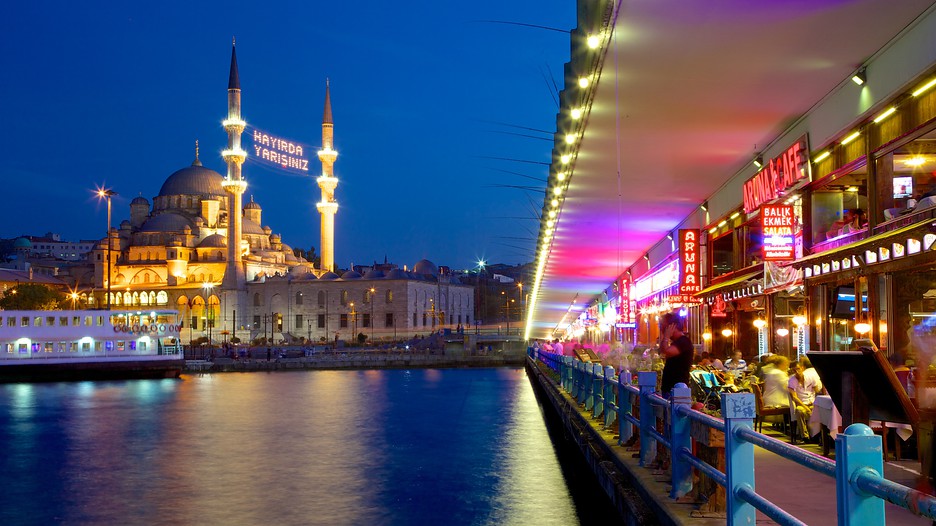
The Sultanahmet peninsula, which is home to the Old City, reflects Istanbul’s diverse political and religious past, particularly in the architecture. The iconic Hagia Sophia (Ayasofya), for example, was once a Christian cathedral and later a mosque. Visit the nearby Topkapi Palace (Topkapı Sarayı), Hippodrome (Hipodrom) and Blue Mosque (Sultan Ahmed Mosque) and save some of your liras for the souvenirs in the Grand Bazaar (Kapalı Çarşı). Get a bird’s-eye view of it all from the top of the 14th-century Galata Tower (Galata Kulesi) or visit nearby Miniatürk to see miniature versions of all these buildings. Cool off in the underground Basilica Cistern.

Cross the Galata Bridge, spanning the Golden Horn, to visit Taksim Square and the New City. Enjoy modern skyscrapers, nightclubs and shopping malls and watch hip youngsters mingle with businessmen.

Buy an Istanbulkart, for easy access to all public transport; the ferry is a good way to see the Beylerbeyi Palace across the strait.

Over 13 million people live in Istanbul, making it Europe’s most populous city, and it’s easy to see what the attraction is. Istanbul’s fusion of East and West, reflected in the culture, architecture, art and cuisine is truly unique.
Accommodation in Istanbul
Istanbul is known as a popular place to visit, with as many as 1317 Istanbul places to stay presented on Expedia's website.
Kick-off your quest for your ideal Istanbul accommodation by looking into the latest offers at the high-rating WOW Airport Hotel, at Istanbul World Trade Center, and the Swissotel The Bosphorus Istanbul, at Bayildim Cad. No: 2 Maçka Besiktas. If those options don't fit the bill, why not check out the Doubletree By Hilton Istanbul Old Town, Ordu Cad No:31, Beyazit, and the Hilton Istanbul Bosphorus, Cumhuriyet Caddesi.
A highlight of any stay in Istanbul is Hippodrome. If you decide it is easier to find accommodation in the vicinity of Hippodrome, the Ascot House and the Sirazli Apart Hotel are both within walking distance.
Read less
Read More
Unknown

Darwin Vacation Packages

By  

Located in the tropical “Top End” of Australia, Darwin is a good base from which to explore the great outdoors and view Aboriginal rock art.
Feed crocodiles, take a cruise on the harbor at sunset, learn about Aboriginal culture, or enjoy a night out in the tropics in Darwin, the Northern Territory’s capital city.

Darwin was founded in 1869. It was named after the English naturalist Charles Darwin by his fellow explorers, who navigated the Timor Sea aboard The Beagle. The city’s recent past has been tumultuous. Darwin was bombed during World War II, and in 1974 a cyclone destroyed it all over again. About 150,000 people call modern-day Darwin home, including some of the territory’s traditional owners, the Larrakia people.

It’s best to visit Darwin from May to September, when it’s not too hot or too wet for outdoor activities. On a Thursday or a Sunday, visit the Sunset Markets on Mindil Beach. On any day, enjoy a harbor cruise from Stokes Hill Wharf, or a movie under the stars at the Deckchair Cinema.

Although the beaches look tempting, don’t jump in anywhere to cool off: crocodiles are abundant in the area. If you’d like to meet a few, visit Crocosaurus Cove and Crocodylus Park. For a safe swim, head to the huge Darwin Wave Lagoon.

Book a tour or rent a four-wheel-drive car and explore the iconic Australian outback in Kakadu, the country’s largest national park. Be sure to bring your binoculars to spot wallabies, swamp birds, reptiles and dingoes. Hike around and find waterfalls to swim under or ancient Aboriginal rock art depicting Dreamtime stories.

Darwin’s turbulent history and dynamic art scene provide plenty to do during the wet season. Get insight into Aboriginal culture at the Museum and Art Gallery of the Northern Territory. To learn about the 1942 bombings, immerse yourself in the Defence of Darwin Experience or see an American B-52 bomber at the Australian Aviation Heritage Centre.

This tropical city is unlike any other city in the world. Come to Darwin to experience the true Australian wilderness and the long, developing story of humankind’s relationship with the Territory’s unique natural environment.
Read More
Unknown

Yellow Water Billabong

By  
Experience quintessential Kakadu in these diverse wetlands, where you can spot kingfishers, crocodiles and dazzling constellations from a cruise ship.
Experience the serene beauty of Kakadu's most famous billabong. Take a peaceful wildlife-spotting cruise, fish for billabong barramundi or marvel at the spectacular night-time starscape above.
Located at the end of Jim Jim Creek, the Yellow Water Billabong is fed by one of Kakadu's most iconic gorges. This ecosystem is home to a huge range of bird, fish and amphibian species, as well as a host of cruising crocodiles.
Delve into Yellow Water's enchanting beauty on the Yellow Water Cruise. This award-winning tour leaves several times a day, with the most popular trips being the sunrise and sunset cruises. Admire vistas of mangrove trees, water lilies and flooded grasslands lit up by the golden sun. Trips last around 90 to 120 minutes. Book in advance to ensure a seat.
The billabong is home to a wide variety of bird life and water-dwelling creatures. Look out for the five species of kingfisher that swoop to catch fish from the shallows. Ducks and geese are also abundant in this fertile region, as are buffalo grazing in the flood plains.
For an unforgettable experience, take the midnight cruise and see Yellow Water under the stars. Local Aboriginal guides will point out constellations and tell stories about the different meanings that have been passed down from previous generations.
Take a day for a Yellow Water fishing tour. Learn how to tie the best lure for catching Yellow Water barramundi with experienced guides and enjoy the tranquil locale while you wait for a bite. If you catch a big enough fish, you can take it home to cook later. These tours provide all the necessary equipment and operate all year.
Ask Aboriginal guides about their ancestors’ lifestyle amid the billabong's flora and fauna. Take the Kakadu Animal Tracks Safari to learn how to make bush tucker from water lily roots or bush carrots.
The Yellow Water is a 20-minute drive from Cooinda Lodge. Get there via shuttle bus, which is included in the cruise price.
Read More
Unknown

Kakadu National Park

By  
This protected expanse of grassy plains, maroon-coloured cliffs and monsoon rivers offers some of the best hiking, boating, and camping opportunities in Australia.
Experience one of Australia's best natural reserves at Kakadu National Park. Hike through sheer red-rock gorges, camp amid local wildlife or watch powerful storms roll across the sky during the wet season.
Before beginning your trip, stop by the Bowali Visitor Centre. Plan your adventure with the center’s maps while you sip a cool drink.
The South Alligator and Jabiru regions offer enchanting Australian scenery. Enjoy views of billabongs and woodlands along the Gungarre trail, a 2.2-mile (3.6-kilometer) walking circuit that takes around 2 hours. You can try bird watching with a guide around the Mamukala Wetlands or the Manngarre Rainforest.
Take a daytrip to Jim Jim Gorge in the early dry season and photograph its dramatic waterfall. Nearby, the Twin Falls and Barrk Malam trails offer sweeping views of the red-earth countryside.
Hike to Nourlangie or Naguluwurr and see ancient Aboriginal rock art. Learn about the meanings of these inscriptions and traditional Aboriginal hunting techniques at the Warradjan Cultural Centre. Stay in overnight campsites nearby with toilet facilities and drinking water sources.
In the wet season, abundant rains fill Kakadu's gorges to capacity. Though many walking trails become inaccessible, the rains open Aurora Kakadu South Alligator as a delightful swimming location. Walk around the Gubara Pools and spot fish darting between the reeds.
Board the Guluyambi River or Yellow Water cruises and spot wildlife among the floodplains. Take a plane tour of the Kakadu Region and capture birds-eye views of waterfalls in full flow.
As afternoon falls, hike to the Bukbukluk Lookout and watch storm clouds rolling overhead. Camping sites during the wet season are limited, but available.
The drive to Kakadu from Darwin takes around a day. Entry to Kakadu National Park requires a reasonably priced pass.
Food, four-wheel drive rentals and tourism operators can be found at the town of Jabiru, on the Arnhem Highway. Dry season lasts from May to October, while the wet season hits its peak in December.
Read less
Read More