Affichage des articles dont le libellé est Afrique. Afficher tous les articles
Unknown

Leidseplein

By  

This lively square in the heart of Amsterdam’s cultural district offers dining and entertainment, with an array of theater, movie, music, comedy and street performances.
Delve into the many delights of buzzing Leidseplein to people-watch while enjoying a meal or just a drink after a day of sightseeing. In the warmer months, the area is packed with people gathered on the terraces of the restaurants and bars. Order a local beer and watch the street performers. In the winter, visit one of the many restaurants or clubs, or head to the ice rink surrounded by hot food and drink stalls for an atmospheric outdoor experience. If you love architecture, 17th-century Leidseplein has some interesting buildings for a walking tour.
There’s plenty to do at night at Leidseplein. Enjoy a typical Dutch meal or order American-style fast food before taking in a movie or a concert. Art lovers can meet up at De Balie, a cultural center for film screenings, theater and debate. De Balie’s buzzing café faces Leidseplein. For a laugh, watch the street performers or book a comedy show (in English) in one of the nearby theaters. Music lovers should check out popular nightclubs Paradiso and Melkweg. These local institutions also host concerts and cultural events. Check their websites for a current schedule of shows and to buy tickets in advance.
In the redbrick neo-Gothic Stadsschouwburg that dominates the square, many of the performances are suitable for an international audience. Dutch plays often have surtitles, which are digital displays with English translations. Next door are the ornate fountain, bar and restaurant of the Amsterdam American Hotel, a National Monument in art deco–style. A two-minute walk away is Max Euweplein, an arty square with a life-sized chess board. Here you will find the Hard Rock Café, with a lovely terrace facing the canal, and the Holland Casino.
Leidseplein is in the southwest of the Canal Ring and easy to get to by public transport, even late at night. It’s a short walk from the Vondelpark. If you are driving, consider leaving your car at one of the park-and-ride lots at the edge of the city and then use public transport to get around. There are parking lots in the city center, but spaces are limited.
Many pubs close just after midnight, but clubs stay open almost all night.
Read More
Unknown

Sarphatipark

By  

De Pijp’s green oasis is the perfect place to relax in the warm sun, picnic with purchases from Albert Cuyp Market and enjoy the colors of Dutch blooms.
Sarphatipark is certainly one of the most beautiful of Amsterdam’s parks. It was designed to reflect formal English gardens. Enjoy its interesting follies, from little bridges over duck-filled ponds to the heritage pump station and gardener’s shed complete with flower-topped roof.
The park was named after the doctor and philanthropist, Samuel Sarphati. Its centerpiece is an ornate 19th-century monument erected in his memory. The bust of the Jewish doctor, who was at the forefront of health innovations and city planning in Amsterdam, was removed during Nazi occupation of the city. When Amsterdam was liberated, Dr. Sarphati’s bust returned to its place overlooking the weeping willows, lakes and brilliant flowerbeds of the park. Look for this lasting symbol of the resilience of the community despite the ravages of war.
The houses overlooking the park date from around Dr. Sarphati’s era and are notable for having housed the studios of several famous artists, including Piet Mondrian. Find his modernist works of striking colors and strong brush strokes in the Gemeentemuseum in The Hague. Look around the area to identify what he might have found as inspiration for his art.
The park’s location near some of the best coffee spots in Amsterdam and the food stalls of Albert Cuyp Market makes it a popular place for an impromptu picnic. Gather coffee, a round of truffle edam cheese, an assortment of fruit and some fresh baked goods from the market and enjoy a picnic on the green grass. In summer the lawns are dotted with local residents soaking up the sun’s warmth or whiling away the warm evenings. There are even plastic groundsheets available in the park if you’ve forgotten your picnic blanket.
Families traveling with children will appreciate the park’s fenced playground. Bars and restaurants encircle the area along Ceintuurbaan. Use Trams 3, 4 or 25 to reach Sarphatipark easily from throughout the city.
Read More
Unknown

De Pijp

By  

Thought to be named for its long, straight streets, this district was once the residence of artists such as Mondrian and is now one of Amsterdam’s trendiest spots.
Wander amid the weeping willows and brilliant flowerbeds of Sarphatipark, take in the bustle and bargains of the Albert Cuyp Market, shop at intriguing antique stores, pop-up shops and unusual boutiques and taste some of the foodie delights Amsterdam’s many migrant groups have brought with them to De Pijp.
Amsterdam’s “Quartier Latin,” De Pijp, has retained the ambiance and charm of its bohemian days when students and artists flocked to the low-cost accommodations of the former working-class quarter. Mondrian, famous for his modern artworks of black lines and blocks of primary color, worked in an attic room of De Pijp. Note that many of the streets are named after famous Dutch artists to reflect the district’s history.
The name De Pijp translates to “the pipe.” It is divided into Oude Pijp ("Old" Pijp) and Nieuwe Pijp ("New" Pijp) by the long Ceintuurbaan street, which is lined with 19th-century houses, cafés and gourmet restaurants. Have coffee in a former movie cinema, shop in a supermarket where products are grouped by recipe and enjoy fresh salads at one of the vegan cafés.
Some of Amsterdam’s best known and inexpensive Turkish, Surinamese, Moroccan and even Nordic restaurants are located in De Pijp. Seek out the multicultural shops and restaurants hidden behind the many stalls of the Albert Cuyp Market. Albert Cuypstraat is a street worth checking out for people-watching and observing humorous exchanges between stallholders and market-goers.
If you’re traveling with kids, head to the Sarphatipark’s playground or take them to the Kinderboerderij de Pijp in the Nieuwe Pijp, where they can pet pigs, rabbits, guinea pigs and chickens and enjoy farmyard activities.
When the sun sets, listen to live music at the former bathhouse De Badcuyp, now a music club and restaurant. Immerse yourself in beer history at the interactive Heineken Experience, housed in the former brewery, before a pub crawl through the backstreets of De Pijp. Find charming pubs with literally hundreds of beers on their menus. Though not nearly as famous as the Red Light District in de Wallen, De Pijp even has its own red light area along Ruysdaelkade.
Read More
Unknown

Hippodrome (Hipodrom)

By  

This city square once was the chariot racing and ceremonial hub of old Constantinople, and is still a popular meeting place.
The old Hippodrome (Hipodrom) of Constantinople is now a landscaped city park that is locally known as “At Meydani” (Horse Grounds). The square is well worth a visit if you want to enjoy the Mediterranean climate of Istanbul and see a glimpse of the old Constantinople at the same time.

Constructed in its original form in the third century, the Hippodrome’s race track once welcomed over 100,000 spectators who watched the chariot races from surrounding galleries. Court ceremonies, parades and coronation events also took place here under Byzantine Imperial rule.

Much of the original Hippodrome has been lost, but you can still follow the original path of the race track, which is now clearly paved. Admire one of Istanbul’s oldest monuments: the Obelisk of Theodosius. It was built in ancient Egypt before being brought to Istanbul by emperor Theodosius the Great the end of the fourth century.

An even older column that still stands on the Hippodrome is the Tripod of Plataea, better known as the Serpent Column, which commemorates the Greek victory over the Persians in 480 B.C. This bronze tripod was taken from Delphi by Emperor Constantine and brought to this site while he renovated the existing Hippodrome as part of a general expansion of the city.

Head to the northern side of the square to find a more modern, European addition to the Hippodrome: A gazebo known as “The Kaiser Wilhelm Fountain.” It was a gift from Germany and erected in 1900.

The Hippodrome was famously the site of seven statues built in honor of the legendary Roman charioteer Porphyrius. The bases of two are still displayed in the nearby Istanbul Archaeological Museum, which also houses one of the serpent heads of the Tripod of Plataea.

The Hippodrome lies at the heart of Istanbul’s historic district in the Old City and is close to other main attractions such as the Hagia Sophia. As a public garden square, the site of the old Hippodrome is well worth a visit to bask in the Istanbul sunshine and enjoy a glimpse into the life and leisure of the old Constantinople.
Read More
Unknown

Blue Mosque (Sultan Ahmed Mosque)

By  

The nickname of this 17th-century structure refers to the brilliant color of its tiled interior.
As one of the most striking features of the Istanbul skyline, the Sultan Ahmed Mosque is awe-inspiring in size and scope. More often called the Blue Mosque, it was built under the rule of Sultan Ahmed I of the Ottoman Empire and completed in 1616. The original architect’s vision was to build a great religious site with prominent Islamic features.

Walk from the Hippodrome to get a captivating view of the Blue Mosque. Gaze up at the six tall minarets and the terraced domes that rise up to the building’s center and you will see that the designer succeeded splendidly in his efforts to impress.

Pass through the stone wall that surrounds the mosque into the courtyard. During the fasting month of Ramadan this courtyard is buzzing after sunset. Inside, the mosque houses the tomb of its founder, who died just a year after his masterpiece was completed. Inspect the madrasa, used as theological school, and the hospice. The most striking feature, however, is the tiled interior: More than 20,000 blue ceramic tiles with over 50 different tulip designs gave this mosque its nickname.

The upper reaches of the building are painted blue and the sunlight is shattered by hundreds of stained-glass windows, a mesmerizing sight.

The Blue Mosque is only a short walk from the Sultanahmet light rail and metro station in the Old City. Entry is free, but as in any religious building, respect and discretion are expected from all visitors. Be quiet, and remove your shoes and put them in the plastic bag provided at the entrance. Females are asked to cover their heads and scarfs are available at the entrance. Flash photography is prohibited. If you wish, you can make a donation to help pay for the maintenance of the Blue Mosque as you leave.

The Blue Mosque still functions as a place of worship, so its doors are closed to non-worshippers during the five daily prayer times. On summer nights you can listen to a historical presentation and watch a spectacular light show. Check the official website for the best time to visit.
Read More
Unknown

Istanbul Vacation Packages

By  
Turkey’s largest city is both European and Asian and has been part of many empires. As a result, Istanbul is modern and traditional, familiar and exotic.
It is Istanbul’s unique blend of Western and Eastern heritage and culture that attracts tourists from all over the world. Experience the comforts of modern Turkey in its malls, galleries and clubs, and the delights of traditional Turkish bazaars, palaces, taverns and mosques. Istanbul’s natural beauty, with pleasant Mediterranean climate, completes its glorious appeal.

Located on the Bosphorus Strait, Istanbul has the Sea of Marmara to the south and the Black Sea to the north. Istanbul connects Europe with Asia and this strategic position evoked many power struggles. Under its previous names of Byzantium and Constantinople, Istanbul served as the capital of the Roman, the Byzantine, the Latin and the Ottoman empires and was once also the capital of Islam. The Turks started to call it Istanbul, a name that was made official when the Turkish Republic was proclaimed in 1923.

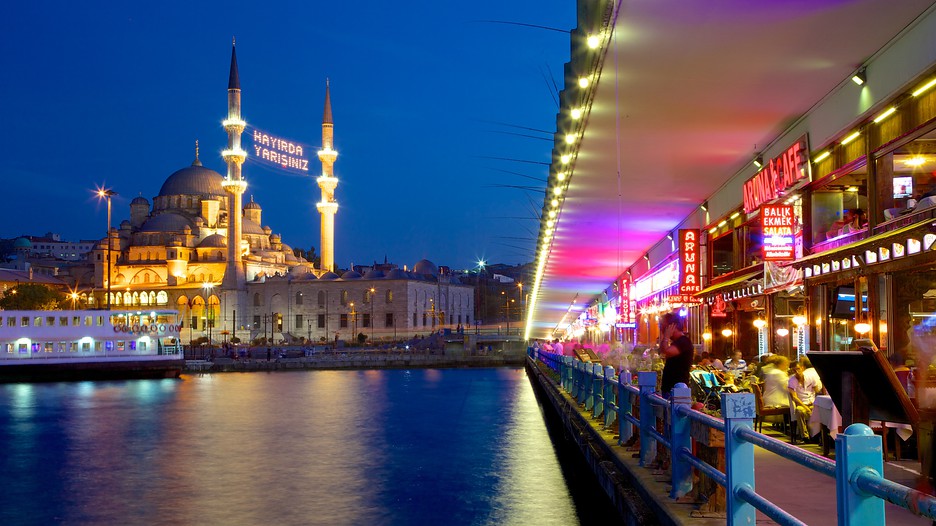
The Sultanahmet peninsula, which is home to the Old City, reflects Istanbul’s diverse political and religious past, particularly in the architecture. The iconic Hagia Sophia (Ayasofya), for example, was once a Christian cathedral and later a mosque. Visit the nearby Topkapi Palace (Topkapı Sarayı), Hippodrome (Hipodrom) and Blue Mosque (Sultan Ahmed Mosque) and save some of your liras for the souvenirs in the Grand Bazaar (Kapalı Çarşı). Get a bird’s-eye view of it all from the top of the 14th-century Galata Tower (Galata Kulesi) or visit nearby Miniatürk to see miniature versions of all these buildings. Cool off in the underground Basilica Cistern.

Cross the Galata Bridge, spanning the Golden Horn, to visit Taksim Square and the New City. Enjoy modern skyscrapers, nightclubs and shopping malls and watch hip youngsters mingle with businessmen.

Buy an Istanbulkart, for easy access to all public transport; the ferry is a good way to see the Beylerbeyi Palace across the strait.

Over 13 million people live in Istanbul, making it Europe’s most populous city, and it’s easy to see what the attraction is. Istanbul’s fusion of East and West, reflected in the culture, architecture, art and cuisine is truly unique.
Accommodation in Istanbul
Istanbul is known as a popular place to visit, with as many as 1317 Istanbul places to stay presented on Expedia's website.
Kick-off your quest for your ideal Istanbul accommodation by looking into the latest offers at the high-rating WOW Airport Hotel, at Istanbul World Trade Center, and the Swissotel The Bosphorus Istanbul, at Bayildim Cad. No: 2 Maçka Besiktas. If those options don't fit the bill, why not check out the Doubletree By Hilton Istanbul Old Town, Ordu Cad No:31, Beyazit, and the Hilton Istanbul Bosphorus, Cumhuriyet Caddesi.
A highlight of any stay in Istanbul is Hippodrome. If you decide it is easier to find accommodation in the vicinity of Hippodrome, the Ascot House and the Sirazli Apart Hotel are both within walking distance.
Read less
Read More
Unknown

Darwin Vacation Packages

By  

Located in the tropical “Top End” of Australia, Darwin is a good base from which to explore the great outdoors and view Aboriginal rock art.
Feed crocodiles, take a cruise on the harbor at sunset, learn about Aboriginal culture, or enjoy a night out in the tropics in Darwin, the Northern Territory’s capital city.

Darwin was founded in 1869. It was named after the English naturalist Charles Darwin by his fellow explorers, who navigated the Timor Sea aboard The Beagle. The city’s recent past has been tumultuous. Darwin was bombed during World War II, and in 1974 a cyclone destroyed it all over again. About 150,000 people call modern-day Darwin home, including some of the territory’s traditional owners, the Larrakia people.

It’s best to visit Darwin from May to September, when it’s not too hot or too wet for outdoor activities. On a Thursday or a Sunday, visit the Sunset Markets on Mindil Beach. On any day, enjoy a harbor cruise from Stokes Hill Wharf, or a movie under the stars at the Deckchair Cinema.

Although the beaches look tempting, don’t jump in anywhere to cool off: crocodiles are abundant in the area. If you’d like to meet a few, visit Crocosaurus Cove and Crocodylus Park. For a safe swim, head to the huge Darwin Wave Lagoon.

Book a tour or rent a four-wheel-drive car and explore the iconic Australian outback in Kakadu, the country’s largest national park. Be sure to bring your binoculars to spot wallabies, swamp birds, reptiles and dingoes. Hike around and find waterfalls to swim under or ancient Aboriginal rock art depicting Dreamtime stories.

Darwin’s turbulent history and dynamic art scene provide plenty to do during the wet season. Get insight into Aboriginal culture at the Museum and Art Gallery of the Northern Territory. To learn about the 1942 bombings, immerse yourself in the Defence of Darwin Experience or see an American B-52 bomber at the Australian Aviation Heritage Centre.

This tropical city is unlike any other city in the world. Come to Darwin to experience the true Australian wilderness and the long, developing story of humankind’s relationship with the Territory’s unique natural environment.
Read More
Unknown

Yellow Water Billabong

By  
Experience quintessential Kakadu in these diverse wetlands, where you can spot kingfishers, crocodiles and dazzling constellations from a cruise ship.
Experience the serene beauty of Kakadu's most famous billabong. Take a peaceful wildlife-spotting cruise, fish for billabong barramundi or marvel at the spectacular night-time starscape above.
Located at the end of Jim Jim Creek, the Yellow Water Billabong is fed by one of Kakadu's most iconic gorges. This ecosystem is home to a huge range of bird, fish and amphibian species, as well as a host of cruising crocodiles.
Delve into Yellow Water's enchanting beauty on the Yellow Water Cruise. This award-winning tour leaves several times a day, with the most popular trips being the sunrise and sunset cruises. Admire vistas of mangrove trees, water lilies and flooded grasslands lit up by the golden sun. Trips last around 90 to 120 minutes. Book in advance to ensure a seat.
The billabong is home to a wide variety of bird life and water-dwelling creatures. Look out for the five species of kingfisher that swoop to catch fish from the shallows. Ducks and geese are also abundant in this fertile region, as are buffalo grazing in the flood plains.
For an unforgettable experience, take the midnight cruise and see Yellow Water under the stars. Local Aboriginal guides will point out constellations and tell stories about the different meanings that have been passed down from previous generations.
Take a day for a Yellow Water fishing tour. Learn how to tie the best lure for catching Yellow Water barramundi with experienced guides and enjoy the tranquil locale while you wait for a bite. If you catch a big enough fish, you can take it home to cook later. These tours provide all the necessary equipment and operate all year.
Ask Aboriginal guides about their ancestors’ lifestyle amid the billabong's flora and fauna. Take the Kakadu Animal Tracks Safari to learn how to make bush tucker from water lily roots or bush carrots.
The Yellow Water is a 20-minute drive from Cooinda Lodge. Get there via shuttle bus, which is included in the cruise price.
Read More
Unknown

Kakadu National Park

By  
This protected expanse of grassy plains, maroon-coloured cliffs and monsoon rivers offers some of the best hiking, boating, and camping opportunities in Australia.
Experience one of Australia's best natural reserves at Kakadu National Park. Hike through sheer red-rock gorges, camp amid local wildlife or watch powerful storms roll across the sky during the wet season.
Before beginning your trip, stop by the Bowali Visitor Centre. Plan your adventure with the center’s maps while you sip a cool drink.
The South Alligator and Jabiru regions offer enchanting Australian scenery. Enjoy views of billabongs and woodlands along the Gungarre trail, a 2.2-mile (3.6-kilometer) walking circuit that takes around 2 hours. You can try bird watching with a guide around the Mamukala Wetlands or the Manngarre Rainforest.
Take a daytrip to Jim Jim Gorge in the early dry season and photograph its dramatic waterfall. Nearby, the Twin Falls and Barrk Malam trails offer sweeping views of the red-earth countryside.
Hike to Nourlangie or Naguluwurr and see ancient Aboriginal rock art. Learn about the meanings of these inscriptions and traditional Aboriginal hunting techniques at the Warradjan Cultural Centre. Stay in overnight campsites nearby with toilet facilities and drinking water sources.
In the wet season, abundant rains fill Kakadu's gorges to capacity. Though many walking trails become inaccessible, the rains open Aurora Kakadu South Alligator as a delightful swimming location. Walk around the Gubara Pools and spot fish darting between the reeds.
Board the Guluyambi River or Yellow Water cruises and spot wildlife among the floodplains. Take a plane tour of the Kakadu Region and capture birds-eye views of waterfalls in full flow.
As afternoon falls, hike to the Bukbukluk Lookout and watch storm clouds rolling overhead. Camping sites during the wet season are limited, but available.
The drive to Kakadu from Darwin takes around a day. Entry to Kakadu National Park requires a reasonably priced pass.
Food, four-wheel drive rentals and tourism operators can be found at the town of Jabiru, on the Arnhem Highway. Dry season lasts from May to October, while the wet season hits its peak in December.
Read less
Read More
Unknown

Malaga Old Town

By  
Explore the city’s historic center to see palace fortresses, a leafy promenade and the birthplace of Pablo Picasso.
Malaga’s historic center, with its monuments and winding streets, is an inviting place for a leisurely stroll. In this small pocket of the city, Malaga’s rich history becomes touchable. Buy an espresso and a handful of Spanish churros (sweet deep-fried pastries) from a street stall and set out exploring. You’ll see ancient Roman, Moorish and Andalusian Christian relics all within a few city blocks.
Follow the curving waterfront paths past the exotic plants and trees of the central communal space called Paseo del Parque. This promenade-turned-park is also the Old Town’s major transport hub and metro buses frequent the long promenade. Rising up from the east end of the park is the impressive Plaza de Toros, Malaga’s historic bullring, which is still in use today.
Leave the park at its northern end to reach the regal fortress, Alcazaba. If you feel fit, walk the steep steps to the towering Gibralfaro Castle to be rewarded with a magnificent view across the city and the Alboran Sea. There are also taxis and buses that drive to the top of the mountain, so there is no need to work up a sweat.
Wandering back down the hill, stop by the Malaga Ampitheatre near the entrance of Alcazaba. This ancient amphitheater dates back to the first century B.C. and is the city’s oldest monument. From here, follow the winding streets west, to see the Renaissance-style Malaga Cathedral.
Finish off your exploration with a Spanish sherry or a spicy sangria and watch the sun set over the terra-cotta tiled roofs of Malaga city.

At night, visit the heart of the Old Town where a lively dining scene unfolds. The narrow, curving one-way streets are dotted with restaurant terraces. Let the charming waiters tempt you to take a seat and order some Andalusian seafood dishes. Until late at night the tapas, paella and fried fish are being brought out to hungry visitors with typical Spanish flair. 
The pedestrian-friendly Old Town is best explored on foot but is also serviced by Malaga’s affordable metro buses.
Accommodation in Malaga Historic Centre
Secure a reservation for one of the 31 Malaga Historic Centre hotels available through Expedia's Malaga Historic Centre accommodation site before you leave.
At the premium end of Malaga Historic Centre's options, you can book a few nights at the Vincci Seleccion Posada del Patio, at Pasillo Santa Isabel no. 7, or the Molina Lario, at Molina Lario 20-22. If you find that those two options don't quite match your requirements, the Hotel Petit Palace Plaza Malaga or otherwise the AC Hotel Malaga Palacio by Marriott may offer all the guest amenities you need.
Read More
Unknown

National Monument

By  

Once a camping spot for hippies, the huge monument in Dam Square commemorating those who have fallen in war is now Amsterdam’s center of the annual Remembrance Day.
As you emerge from the Red Light District or Chinatown onto the eastern side of Dam Square, notice the huge National Monument. Unveiled in 1956 by Queen Juliana of the Netherlands, the multi-faceted monument is dedicated to those that died in World War II.
The monument’s main pillar features emotive representations of Dutch Resistance members, the working class and intelligentsia. Take a closer look at the monument’s wall and you’ll see the 12 urns which contain soil from execution grounds, burial sites of war dead and Indonesia (formerly the Dutch East Indies). Lions, the symbol of the Netherlands found on everything from flags to banking logos, flank the wall.
If you’re visiting the Netherlands in May, head to Dam Square to participate in Remembrance Day on May 4, when the king lays a wreath at the monument. This event commemorates not only those who fell during World War II but also Dutch nationals lost in other conflicts and peacekeeping missions. Liberation Day, the following day, marks the end of Nazi occupation in the Netherlands.
In the 1970s, the monument, a sign of liberty and freedom, became a hangout for hippies, who occupied the square and slept beneath the huge sculpture. It happened so regularly that the term “Damslapen” (Dam-sleepers) was used to refer to the squatters, who were eventually moved out by local authorities. This little quirk in the history of the Dam was captured incidentally in the 1971 film Puppet on a Chain as a character walks through the crowd of hippies. Rent the movie before you visit Amsterdam to look for familiar spots.
These days the National Monument is frequently occupied by hundreds of multicolored bicycles of local residents and tourists visiting the Palace, Madame Tussauds Wax Museum, the Nieuwe Kerk and famous shopping streets around the Dam. Enjoy the busy square and view the monument from the many sidewalk cafés and restaurants. In an alley behind the monument you’ll find Wynand Fockink, one of the city’s historic distilleries and bars where you can try the fruit liqueurs and aged jenever, also known as Dutch gin.
Read More
Unknown

Rijks museum

By  

This palatial building full of Dutch paintings and international artifacts is the country’s largest public-funded museum.
To understand how the tiny country of  the Netherlands became a world superpower through both art and trade, visit the Rijksmuseum. Browse through over a million works of art and historical objects in more than 200 rooms. You’ll see famous paintings by Rembrandt and Vermeer, among hundreds of other artists, and admire the ornate building itself.
The Rijksmuseum was established in 1800 and moved to its present location in 1885. The celebrated Dutch architect Pierre Cuypers designed the ornamental building with Gothic and Renaissance influences. It houses the country’s finest art collection and underwent years of restorations with the main hall reopened to the public in April 2013. Be sure to take in the tiled depictions on the outside façade, and the palace-like interior with vaulted ceilings, mosaic floors and stained glass.
The vast collection of Dutch Golden Age art is awe-inspiring, easily taking a morning or afternoon to explore. The museum’s most prized collection is a group of paintings by Rembrandt van Rijn, including his colossal masterpiece Night Watch, which depicts a group of military guards that appear to be poised to jump off the canvas. A far more peaceful scene is the Milk Maid by Johannes Vermeer.
This museum includes far more than Dutch paintings. The collection of Asian art has 8,000 objects, ranging from paintings, prints and sculptures, to lacquer boxes, jewelry and tea bowls. Other collections include nearly 1,000 Western sculptures, a history of Dutch interior design, and some 10,000 fashion items, from tunics to pocket watches.

Set aside at least half a day to see the major works at the Rijksmuseum. Buy your admission tickets from the official website to avoid waiting in line.
Rijksmuseum is located between Stadhouderskade and Museumplein and is open daily, except on New Year’s Day. There are many public transport options. The hop-on, hop-off canal boat tours stop directly in front of the museum. There are parking lots in the city center, but spaces are limited.
Read More
Unknown

Anne Frank House

By  

See where this brave and famous Jewish teenager hid from the Nazis during World War II and recorded her world-famous diary.
A visit to the Anne Frank House is a sober yet enlightening experience. The life story of Anne Frank has become one of the most famous accounts of a Jew hiding in Nazi Germany. Anne’s diary, which she started in 1942 when she was 13, is the most translated Dutch book of all time. Its first translation was in German, in 1950.
Anne Frank’s original diary is on display in the museum and so is the tiny attic where she spent most of the war. The two families in hiding were discovered in 1944 and sent to concentration camps. Only Anne’s father survived the ordeal and set out to publish the diary of his youngest daughter so their plight wouldn’t be forgotten. About 107,000 Dutch Jews were deported during the Holocaust and less than five percent returned. One of the brave people who helped Anne’s family hide saved her diary from the ransacked shelter.

Visit the cramped shelter in the old canal house, which is part of the museum. The attic’s stairs were hidden behind a bookshelf, which is still there. The rooms are littered with poignant reminders of the war. Look for the map on which Anne’s father Otto recorded the progress of Allied troops who freed the Dutch in 1945.
A modern annex houses most of the exhibits and a bookshop. Buy an English edition of Anne’s diary and see the Dutch original in the Diary Room, along with Anne’s short stories and a notebook of her favorite quotes. The introductory movie with war images tells a horrific story and may be too upsetting for some.
The Anne Frank House is located on the Prinsengracht and can be reached by taking a tram, canal boat or bus to Westermarkt. It’s also a 20-minute walk from Dam Square. The house is open daily and there is usually a long line for entrance. Make sure you come early or pre-book your tickets through the official website. Photography is prohibited.
Read More
Unknown

World Trade Center

By  

This business hub outside the city center caters to international crowds with shops, art exhibits and restaurants.
The World Trade Center (WTC) in Amsterdam is a compact “world city” with international businesses, residential housing, art exhibits and shops. The office complex offers a wide range of business services, including use as a conference center. For residents from around the world and visitors alike, the delights of the World Trade Center are cultural and gastronomical. Those looking for something to do outside of the city center on a rainy afternoon should head here to shop, look at art and enjoy a meal.
Located in the Zuidas business district, less than 10 minutes’ by public transport from central Amsterdam, the World Trade Center is one of the largest of its kind in the world. The complex consists of nine towers and two large halls with shops and services. With 27 levels, the H tower is the highest building.
During Amsterdam’s Golden Age in the 16th and 17th centuries the economy boomed, and ever since the city has welcomed international traders. The Dutch capital is still seen as an attractive place to establish a global business and the WTC leases office space to hundreds of internationally-oriented companies.
Admire the spacious atrium where cultural events are held and then head inside the buildings to browse through the shops. Splurge on watches, pearls and diamonds in one of the jewelry stores or get a new hair style at the hairdressers. Afterwards, enjoy lunch in one of the cafés or restaurants on ground level.
The Amsterdam Fund for the Arts promotes up-and-coming artists with exhibits in the WTC. See one of the rotating exhibits by contemporary artists from across the globe in the H tower.
Zuidplein, a courtyard with trees and garden beds, connects the WTC with the public transport hub. It is a 10-minute train journey from Central Station to Station Zuid. The WTC is also just a short train ride or drive from the well-connected Schiphol airport. Because it caters to traveling businesspeople, the complex is surrounded by quality hotels and fully-equipped apartments. There is no admission fee, but you may have to pay for concerts or special exhibits.
Read More
Unknown

Amsterdam Vacation Packages

By  

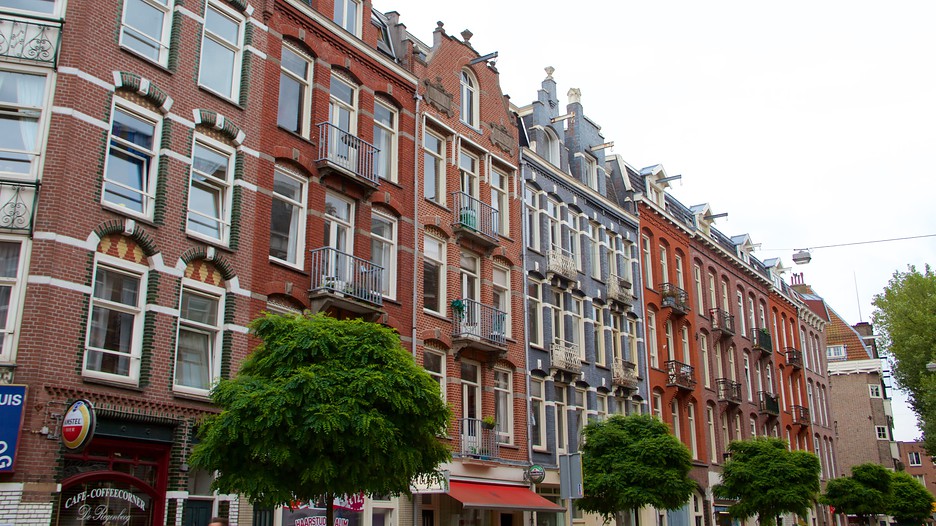
The capital of the Netherlands is famed for its 17th-century canal network, gabled houses, museums and coffee shop culture.
Known as the Venice of the North, Amsterdam is a city based on a network of semi-circular canals, with hundreds of bridges. Amsterdam’s famous museums and trademark coffee shops are popular daytime haunts, while the crowds flock to the bars and clubs around the squares at night. Amsterdammers love speaking English and are known for their liberalism. This multicultural capital welcomes everyone!
Narrow, cobbled streets, limited parking and crisscrossing trams make sightseeing by car too complex. Instead, explore the compact city center by foot, rent a bike or take public transport. Book a canal cruise to see the old city center in just an hour. You’ll learn about Amsterdam’s remarkable history and see fine examples of its iconic gabled houses.
Amsterdam has its roots in the 13th century, but its famous canal district was developed in the 17th century. The Canal Ring is now a world heritage site. One of the many monuments here is the Anne Frank House.
On central Dam Square, tour the old Royal Palace and admire the wax statues in Madame Tussauds. Nearby is the Red Light District. Its narrow streets full of adult entertainment venues lead to the more family-friendly Nieuwmarkt, a square surrounded by eateries.
Just outside the Canal Ring is the Museum Quarter. Don’t miss the Van Gogh Museum and Rijksmuseum; both have collections of paintings by world-famous Dutch masters. Relax on the grass of nearby Vondelpark. From here, it’s an easy stroll to the Leidseplein, a hub for music and nightlife.
Since the 1970s, coffee shops have allowed visitors to enjoy the city in a more relaxed state of mind. If you’d rather drink than smoke, visit a pub to order the local beer. A typical Dutch lager tastes even better after visiting the old brewery for the Heineken Experience.
Young travelers are drawn to Amsterdam for its promise of revelry. Those after a more refined cultural experience are also easily entertained in this beautifully preserved city with typical Dutch hospitality.
Accommodation in Amsterdam
As you'd expect from the capital , Amsterdam boasts a wonderful array of resorts, hotels and other accommodations with no less than 567 Amsterdam hotels that visitors can book through Expedia's easy-to-use website.
If you're interested in booking a bed at the more upmarket end of the spectrum, check out the rates and amenities at the Inntel Hotels Amsterdam Centre, located at Nieuwezijds Kolk 19, or the NH City Centre Amsterdam, at Spuistraat 288-292. Another two upmarket hotels that previous guests recommend are the Grand Hotel Amrâth Amsterdam and the Best Western Amsterdam Airport Hotel.
Read More
Unknown

Paris Catacombs

By  

This chilling underground graveyard opened as a tourist attraction in 1874, and houses the remains of more than 6 million Parisians.
With its eerily ornate bone formations, the Paris Catacombs seems like some macabre artwork but it actually spawned from practicality. Overcrowded graveyards in the late 1700s were causing health problems in the city, including the spread of disease through contaminated water. From 1786 to 1814, the exhumed bones from the city’s cemeteries were transferred to the abandoned underground limestone quarries, and the result is the haunting catacombs. The passageways are more than a mile long (1.6 kilometers), with wall-to-wall skeletal remains neatly arranged around memorial plaques. The bones are arranged according to bone type – skulls, femurs, tibias. Some bones are more than a century old, with some that date back to the French Revolution.
Visitors enter in the 14th arrondissement, descend underground via 130 steps and then wind through the low-ceilinged, dimly lit tunnels. The walls feature intricate carvings, known as the Sculptures of Decure. Dating back to 1777, the works were created by Decure, an army veteran and quarry inspector, who perished when a sinkhole opened on an upper level of the tunnel.
Rent a personalized audio tour, which walks you through the winding passages and provide background on some of the ossuary’s highlights. These include the Fountain of Samaritan, a small spring encircled by a wall of bones. The oldest artifact in the catacombs is the Sepulchral Lamp, which was lit by quarrymen working in the corridors.
Allow an hour to wander through the tunnels, which are open every day except Mondays. Adults must accompany children under the age of 14.
The entrance to the Paris Catacombs is nondescript, tucked away in a patch of trees on the Place Denfert-Rochereau. Be prepared to wait an hour or more in line to enter the catacombs. Take a sweater as it gets cold underground even in summer. It can also be slippery so take care, especially on the many stairs in and out of the tunnels. Stay on track, as you don’t want to find yourself lost in the further 180 miles (290 kilometers) of quarry tunnels. There is paid parking nearby, and public transportation stops nearby as well.
Read More
Unknown

Getting away from it all during the holidays

By  
With holidays, family activities, and work deadlines, December may not come to mind when you’re thinking of a trip. But don’t overlook it so fast—this might be the ideal time to get away from it all. To help inspire you, we’ve picked the best places to travel in December, and have broken down our suggestions into three categories: family trips, romantic getaways, and solo adventures.
 Résultat de recherche d'images pour "Bahamas"
Where to travel in December with your family
Whether your family prefers to unthaw during the month of December or revel in its frigid glory, you’re in luck, as plenty of family-friendly destinations await in warm and cold climates alike.
Atlantis, Bahamas. How does a 141-acre water park sound? Or swimming with dolphins? Head to the Atlantis resort in the Bahamas. This island paradise also boasts a marine habitat, home to more than 50,000 animals. Your family can check in and let the staff take care of everything. The hotel has a casino, restaurant, golf, and spa at the ready. Virtually every room at the resort offers a spectacular view of the water or the luscious resort grounds.
Honolulu. If you’re on the West Coast and looking for a shorter jaunt, don’t forget about Honolulu, the capital city of the Aloha State. Honolulu is replete with miles of beach front. Stroll along famous Waikiki Beach, visit the Chinatown arts district, or hike to the top of Diamond Head State Monument for stunning panoramic views of the city. Wind down at the end of the day with a family session of beach yoga at Kaimana Beach. Of course you can’t leave without taking your family to a traditional luau!
Honolulu
New York City. A trip to The Big Apple offers something for even the moodiest teenager or crabbiest toddler. If your group wants to enjoy the best scenery in NYC without walking around the city’s icy streets, the Empire State Building should be your first stop. Floor No. 86 of this historic building is an observatory, offering stunning views of the entire city and excellent photo opportunities. Also, with white stuff on the ground, Central Park comes alive in a whole new way. Take the kids ice skating at the Wollman or Lasker rinks. Family fun can also be found at the Swedish Cottage Marionette Theatre, one of only a few marionette theaters in the country still offering original productions. The Central Park Zoo also remains open and active in December.
Boston. Head a bit northeast of NYC to take your clan to this storied city. Boston has dozens of hills ripe for sledding in December, including The Bowl next to Boston Pond. Better yet, slap on some skates and hit the ice on the Boston Common Frog Pond, which makes its home in America’s oldest public park (that’d be Boston Common itself).
Where to travel in December as a solo traveler
Traveling alone this holiday season may just result in the best December vacation you’ve had in recent memory. Without any distractions or the need to compete with the itinerary demands of fellow travelers, you can really enjoy your winter adventure.
Bangkok. Thailand is an increasingly popular destination for all types of adventurers, including those seeking solo travel. The capital city of Bangkok is teeming with delicious cuisine, and easy on the pocketbook. Hail a Tuk Tuk driver (you might even consider hiring one for the entire day), and get ready to see one of the most beautiful and culturally rich cities in Asia. Bangkok is known for its street food, so remember to grab some authentic pad thai on your way to one of the local temples or the shopping district. And if you’re looking for some holiday gifts, you can get suits and other custom-tailored clothing made here in a jiffy.
Iceland
Belize. If you have more of a hankering for Central America this December, head to Belize. This tiny nation is renowned for crystal-clear waters and generous supply of beach front. Take a hike to ancient Mayan ruins or experience some world-class SCUBA diving. If you’re feeling the need for an adrenaline rush, take a ziplining excursion in the local rainforest canopy.
Dublin, Ireland. The Irish capital is one of the best December holiday destinations to consider as a solo tourist. Not only does this city offer a wealth of hospitality and history, but you can easily navigate it alone. With a city this friendly you might end up making some new friends that convince you to drink one too many pints of Guinness. Stop by Lemon Crepe and Coffee Co. for some morning eats, and then head out either on foot or by cab to take in everything from local pubs to the Dublin Writer’s Museum. Speaking of writers, this proud literary haven offers walking tours that celebrate the likes of Oscar Wilde. Naturally, no trip to Dublin would be complete without treating yourself to some fish and chips; check out Leo Burdocks.
Reykjavik. Reykjavik is another location very friendly to people traveling alone. While the sunlight is limited here in December (the sun rises after 11 a.m. by the end of the month), you certainly can pack in plenty of activity during the few precious hours of daylight. Go on a bike tour and stop by one of the city’s notable cafes; the Laundromat Café is a particular favorite for visitors. Reykjavik is also a wonderful home base from which to take day trips to natural hot springs and hiking trails.
Viewfinder Tip: If the night sky is clear, keep your eyes out for the Aurora Borealis in Reykjavik.
Where to travel in December as a couple
Taking some time away together as a couple is a chance to reconnect and avoid arguments with the in-laws. Whether you want to heat things up or create a chance to cuddle up in the cold, booking a trip to one of these top December destinations is the best way to treat yourselves this holiday season.
Seville, Spain. Study up on Seville’s past at local attractions such as the Alcázar palace, Museo del Baile Flamenco, and the Cathedral of Seville. After a morning of walking the city, you and your better half can hit up the Baños Árabes. This relaxing retreat offers thermal baths, aromatherapy, massages, and other indulgent treatments. It’s an excellent place to unwind. Of course you shouldn’t come to Seville if you don’t plan on eating. Tapas bars are plentiful here, as you might imagine, especially in the center of town. You also can find gourmet food and street food vendors, so no matter where your appetite leads you, Seville will deliver. If you’re interested in partaking in the tapas tradition, check out Vinería San Telmo or Bar Europa.
La Jolla, California. Nestled just north of San Diego, this quiet beach town is an excellent place to go when you want a relaxing couple’s retreat. Take a walk on the La Jolla Shores beach, and then stop in at one of the city’s many fine-dining restaurants for an elegant dinner. George’s at the Cove and La Dolce Vita Ristorante both impress with cuisine and atmosphere.  At the end of the day, head south to Coronado to go ice skating on the beach at Hotel del Coronado.
Paris
Paris, France. Paris is considered one of the most romantic cities in the world, and it certainly delivers on its promise during the final month of the year. Paris comes alive with its holiday spirit during December, and a visit to the charming Christmas markets to sip on mulled wine and purchase hand-crafted gifts is a must. While you’re in town, stop by the ice skating rink set up just outside of Paris City Hall (or, as locals call it, Hotel de Ville). The city actually sets up quite a few rinks, so what better way to enjoy the chill than by taking a morning tour of several local rinks? The Champs-Elysées is another can’t-miss location once the holidays near. Trees along the famous stretch of pavement are adorned in lights and garlands, and the shops are even more inviting.
Aspen, Colorado. December signals the beginning of the best season to visit this ski-lover’s dream town, because the snow is fresh and the air is crisp. Get a lift ticket to Snowmass and hit the black-diamond runs with your snow bunny, then take in some warm drinks and dinner at the lodge afterward. This city also lures visitors during December with events such as an ugly sweater party at The Little Nell Hotel, and fireworks over Aspen Mountain on New Year’s Eve.
If you could go anywhere, where would you travel in December?
Read More
Unknown

Petit Palais

By  
The smaller sister museum to Paris’ famous Grand Palais, this purpose-built exhibition space houses works from esteemed artists such as Cézanne and Rembrandt.
Petit Palais contains the Musée des Beaux Arts de la Ville de Paris, Paris’ municipal museum of fine arts. Visit to admire the stunning Beaux-Arts style building and to discover the surprisingly vast collection of paintings, sculptures, tapestries, manuscripts and other objects, ranging from antiquity to the 20th century.
Petit Palais is located on Avenue des Champs-Elysées opposite its counterpart, the Grand Palais, which was also built for the Universal Exposition of 1900. The Beaux Arts-style structure was designed by architect Charles Girault, who also supervised the team behind the nearby Grand Palais. 
Before entering the exhibition space, admire the attractive façade. Like many buildings in the Beaux Arts style, it features Greek and Roman-style components such as Ionic columns, as well as more elaborate decorative ornamentation. 
Inside the building, find an impressive array of memorable artwork that spans several centuries. Set over two levels, the art is arranged in sections, each covering a major artistic movement. Start with the early classical section, where you can see bronze objects, terra-cottas, glasswork, gold and jewelry from the Greco-Roman era.
In the 17th-century section, look for paintings by Dutch and Flemish masters including a Rembrandt self-portrait and the Abduction of Proserpina by Rubens. French artists are well represented in the collections. You’ll find lesser-known treasures from artists such as Gauguin, Monet, Manet, Cézanne and Delacroix. 

Look for the section dedicated to Paris at the turn of the century, the very time when the Petit Palais was built. Don’t miss the Art Nouveau dining room by Hector Guimard and the colorful Art Nouveau vases of innovative French glassmaker Émile Gallé. When you’re finished surveying all the collections, sit for a drink in the pleasant garden café. 
Petit Palais is in the 8th arrondissement next to the Champs-Élysées – Clémenceau metro stop. Entrance to the Petit Palais permanent exhibitions is free, but there may be a charge for temporary exhibits. The museum is closed on Mondays and on major public holidays.
Read More
Unknown

Louvre Museum

By  

Home to the Mona Lisa, and instantly recognizable by its glass pyramid, this landmark has vast collections of well-known art from France and around the world. 
With miles of corridors and 15 acres (six hectares) of exhibition space, Paris’ largest museum is one of the biggest in the world. Its official title is Musée du Louvre, but is known to locals simply as “the Louvre.”
This world-class museum has three wings: Denon, Sully and Richelieu. You can easily spend the entire day exploring the paintings, sculptures, decorative arts, Near Eastern antiquities, Egyptian antiquities, Islamic art, prints and drawings, and Greek, Etruscan and Roman antiquities. The objects in the collections range in date from 5,000 B.C. to the 19th century.
Perennially popular works include the marble statues Winged Victory of Samothrace and Venus de Milo, and the Mona Lisa to name just a few. The lines to view these masterpieces can move slowly, but there’s plenty to observe — both art and people — while waiting.
The Louvre’s vast collection can seem overwhelming, but a little planning in advance will ease the pressure. Make a succinct list of key works you wish to see. The Louvre website is an excellent resource, with features such as a detailed floor plan of the permanent and visiting exhibits, and an online catalogue of works.
Buy your entry ticket in advance from the website or from many stores in France. With advance purchase tickets, you will use an entrance where the lines are much shorter. Still, don’t miss the main entrance, as it is where you’ll find the Pyramide du Louvre (Louvre Pyramid), in the center of the main courtyard, the Cour Napoléon.

Like the Eiffel Tower and the Pompidou Centre, the Louvre Pyramid, a creation by Chinese-American architect I.M. Pei, was initially criticized for being too modern. Unveiled in 1989, the steel and glass structure was built as part of a new entrance foyer designed to better accommodate the thousands of daily visitors. Today the pyramid is regarded as an iconic symbol of Paris.
Once inside the museum, take a guided 90-minute tour for a good introductory overview of the museum and key pieces. You can also rent audio guides in the form of a Nintendo 3DS or a buy a smartphone application.
The Louvre is located in the center of Paris, along the Right Bank, in the neighborhood known as the 1st arrondissement. There are three entrances: the main entrance at the pyramid, an entrance from the Carrousel du Louvre underground shopping mall, and an entrance at the Porte des Lions (near the western end of the Denon wing). The museum is accessible by public transportation, including boat, and there is parking available.
Read More
Unknown

A trip to Spain, Portugal and Morocco

By  

Link to Madrid

Access to the hotel, then you might have enough time to explore Madrid (MADRID), and in the evening meet with the director and members of the flight.

on the second day  

 Madrid MADRID
Madrid is the highest peak rising sea where 2,180 feet from the surface of the ground so the Spaniards called the city closest to the sky. . Enjoy touring sightseeing. Enjoy watching Toledo (Toledo), the high walls of the city, which lies above the Tagus (Tagus), the painter famous paintings Greco (El Greco), which is the most famous Spanish museums so far. (Optional trip unpaid).

on the third day 

 Madrid MADRID - Avila AVILA - Coimbra COIMBRA

The trip to the west forts Avila (Avila) and then to Salmanca (SALAMANCA), about 6 miles from the road taken by the armies of Napoleon in 1812 and do not miss a tour of the field Salmanca Plaza Mayor (Salamanca's Plaza Mayor) the most beautiful squares Spanish. The leave Salmanca (Salamanca) where heading south to the city of Ciudad Rodrigo (Ciudad Rodrigo) dungeon, which is located by the highest Aozhuida (Rio Agueda). Enjoy watching trees, forests and mountains of the Serra da Astirla Valley (Serra da Estrela) during direct you to Comera (COIMBRA) to spend the night.

on the fourth day 

 Coimbra COIMBRA - Fatima FATIMA - LISBON Lisbon

This morning tour in Comera (COIMBRA) to watch the splendor and beauty of the city and then leave the south to the city of false is exposing Batalha to visit some monuments beautiful there .ttoagaf then in Fatima (FATIMA) for sightseeing brilliant and this evening up to Lisbon (LISBON) those capital Portuguese wonderful to spend the night there..

on the fifth day 

 Lisbon LISBON

Constructed seas Henry (Henry the Navigator) to Lisbon (LISBON) in the fifteenth century and dubbed lover of the sea. Will enjoy watching Henry Memorial Monument, Tower of Belém (Belem Tower), the castle Moroccan (Moorish Citadel), the field of dark horse (Black Horse Square). In addition to some other landscapes. Afternoons you spend in the streets of Alfama (the Alfama's) decorated, or perhaps an optional tour along the shores Estrual (Estoril Coast) where Astroyl heading to the city of Cascais and Estoril and Cascais. (Optional trip unpaid).

on the sixth day 

 Lisbon LISBON - SEVILLE Sevilla

We are heading from the plains of the city Alientigio (Alentejo) circular and land Alhacicheh and cork trees and Alokutablos to leave the south, where the lights Andalusian Andalusia Baqraha white and olive trees, figs, almonds and so we're going through the city of Beja Beja Sevelli to Seville

one the seventh day  

Sevilla SEVILLE

This morning enjoy watching one of the most beautiful Spanish cities, may prefer that you go where the optional tour to visit some of the monuments in Spain. Then go to the Tower Jrilda (Giralda Tower) decorated with Moroccan decoration. Then visit the Alcazar Palace, which was built since the twelfth century (Alcazar), who was once a palace of kings Moroccans. (Optional trip unpaid).

on the eighth day 

 Sevilla SEVILLE - Marrakech MARRAKESH

Today, we are heading through the beautiful vineyards to get to the beach where boarding the ferry to Morocco Morocco and beyond are heading south to the beach, which is located in the North African Barbary Barbra then heading towards the west through Bmkins (Meknes) to spend the night in Fes (Fez).

on the ninth day 

 Fez FEZ

Today your appointment with recreation in the ancient city of Fez, which occupies a unique position abounding natural monuments .snstmta this morning, where we will visit the wonderful city and take a tour of the center of the street where Nemczu between the Moroccan people wearing clothes and doing the city's famous buying and selling. The Ghutra afternoon, you can join the optional excursion to visit landmarks Thesaurus Meknes.

on the tenth 

 Fez FEZ - Marrakech MARRAKESH

Enjoy these rural life that excite in the mind memories where village Pew CMU Beau Geste, and so we're going through the center of Atlas Middle Atlas on our way to the city of Fez Fez those ancient city, which occupies a unique position in terms of beauty and water resources abundant here needs to be mentioned that this city is the oldest in the heart of the imperial cities of Morocco and by the city of Medina, which is one of the largest cities built since the Middle Ages vitality.

on the eleventh 

 Marrakech
 MARRAKESH  This morning will be a visit to the famous places, which include the beautiful scenery, which accounts for all your attention and you feel that you stopped the wheel of time. The Marrakech is a place of meetings, which held its first Bedouin camps, but now has become a city of festivals. (Optional trip unpaid).

on the twelvthe day 

 Marrakech MARRAKESH - Casablanca CASABLANCA - RABAT Rabat

Snstmta this morning wonderful, where we will visit landmarks the city of Rabat, including the Gate King King's Gate and market roses and Tower Hassan Hassan Tower and the afternoon, we are heading towards Casablanca Casablanca, which lies in the far west and pause a bit before we leave to the heart of Morocco by Sitar Settar to get to the most beautiful Walden Moroccan Marrakech Marrakesh and we can spend the trip is optional, which is the best choice of what we are doing this evening

on the thirtieth day  

Rabat RABAT - the independence of the ship to Spain FERRY CROSSING TO SPAIN - Granada GRANADA

Today we will express the Strait of Gibraltar to the Spanish land where the resort Snstmta so charming Spanish Costa del Sol Costa del So we're going to Malaga Malaga and then west to the city of Granada Granada to spend the night there.

on the fourteenth 

 Granada GRANADA - MADRID Madrid

Visits today will include a visit to the Alhambra Alhambra Palace, accompanied by a local guide, which was built by the kings of Moroccans, where he was a summer palace for them. Certainly it would raise Admire the beautiful architecture and fine ceilings and walls of this great palace in the afternoon and would leave to the heart of the city of La Mancha La Mancha famous Baklalla and aerobic Tuahnha to spend the rest of'd be sleeping in Madrid Madrid.

on the fifteenth 


 to return home. 


Independence plane back up to where in the home the same day
Read More